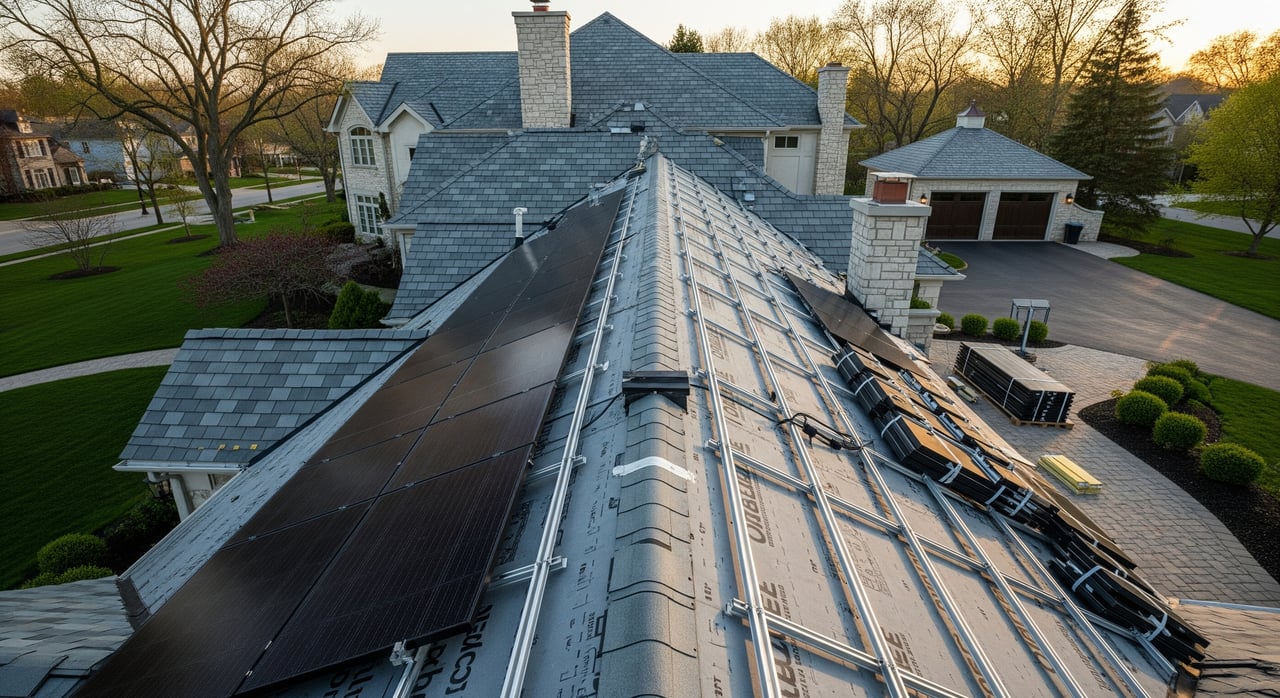
Thinking about going solar on your Lisle home but not sure where to start with permits, fees, or roof readiness? You’re not alone. Getting the steps right can save weeks of back‑and‑forth and prevent surprises when inspectors or the utility get involved. In this guide, you’ll learn what permits Lisle typically requires, how fees are commonly structured, how roof age and structure affect approvals, and the best sequence to avoid delays. Let’s dive in.
Lisle permits at a glance
Going solar in Lisle usually involves approvals from the Village’s Building & Zoning Division and coordination with ComEd for interconnection. While forms and fees can change, the core workflow is predictable if you prepare a complete package up front and schedule inspections strategically.
Permit authority
- The Village of Lisle typically issues building and electrical permits for residential rooftop solar.
- Confirm whether Lisle uses separate building and electrical permits or a combined solar package.
- If you plan to add batteries or mechanical ventilation, ask if additional permits are needed.
What goes in your application
Most successful applications include a complete, well‑organized packet. Your installer often prepares this, but you should know what to expect:
- Completed permit application(s) with owner and contractor information, including your licensed electrician’s details.
- Site plan showing property outline, home footprint, rooflines, and orientation.
- Module layout with array locations, dimensions, attachment plan, and clearances to ridgelines, eaves, and chimneys.
- Manufacturer cut sheets for modules, inverters, and racking.
- Single‑line electrical diagram from array through inverter, AC disconnect, and main service, including grounding and overcurrent devices.
- Structural documentation or engineer’s calculations if required.
- Proof of contractor licensing and insurance.
- Fee payment and any parcel identifiers requested by the Village.
Inspections to plan for
Expect three core municipal inspections, plus utility steps when the system is ready to energize:
- Rooftop/anchor inspection after racking and attachments are installed but before modules are set.
- Electrical rough inspection for conduit, wiring, and inverter connections prior to final energization.
- Final inspection verifying completed array, grounding, labeling, and rapid shutdown compliance.
- Utility involvement for meter work or interconnection as directed by ComEd.
Timelines and review
- Plan review can range from same‑day to roughly 1 to 3 weeks, depending on completeness and workload.
- Inspections are commonly scheduled within 1 to 10 business days.
- Interconnection timelines with ComEd vary and can extend the overall schedule. Submitting early helps keep the project on track.
Fees and what to verify with Lisle
Permit fees in Illinois suburbs are often handled in one of three ways. Because fee schedules change, confirm the current structure with the Village before you sign contracts.
- Some communities use a flat residential solar fee, commonly in the $100 to $300 range.
- Others base fees on project valuation or a per‑kilowatt rate.
- Electrical permits may be separate or bundled, and plan review fees can be included or assessed separately.
Ask the Village of Lisle to confirm: current flat fee amounts, whether building and electrical permits are separate, what plan review covers, and whether any reinspection fees apply.
Roof and structure: be ready before permits
Your roof’s age, condition, and framing capacity influence whether the Village will require structural documentation and how smooth your inspections will be. Getting this right upfront often prevents rework.
When structural calculations are needed
Many jurisdictions request calculations or a letter from a licensed structural engineer in specific cases, including:
- Attachment methods that concentrate loads beyond standard assumptions.
- Any changes to structural members such as rafters or trusses.
- Roof replacements that expose or alter framing or sheathing before solar is installed.
- Larger systems, or those requiring special mounting points.
If required, calculations should show that rafters, trusses, and attachment connections meet snow and wind loads appropriate to Lisle.
Roof condition and warranties
- Inspect roof age, shingle condition, and sheathing integrity. If the roof may need replacement within the next few years, it is usually better to replace it before you install solar.
- Confirm that racking attachments, flashing, and sealants meet shingle manufacturer requirements so you protect your warranty.
- If you plan to replace the roof soon after solar, expect to provide a clear plan for removal and reinstallation of the array.
Attic and layout checks
- Verify attic ventilation and framing. Poor ventilation can shorten shingle life and trigger code issues.
- Identify obstructions such as skylights, chimneys, vents, or roof‑mounted HVAC that will shape your layout.
- Plan clearances from ridgelines and edges to support firefighter access per local fire code.
Step‑by‑step: sequence to avoid delays
A well‑timed sequence keeps your project moving and reduces back‑and‑forth with the Village and ComEd.
- Preliminary site assessment: Have your installer review roof condition, shading, and electrical service capacity.
- Roof decision: If the roof is near end‑of‑life, schedule replacement before racking and penetrations.
- Get 2 to 3 bids: Ensure each bid spells out who pulls permits, who manages interconnection, and how schedules are coordinated.
- Select your installer: They prepare permit‑ready plans, including layout, equipment specs, and any needed structural calculations.
- Submit permit application: File with the Village of Lisle and pay the required fee.
- File utility interconnection: Submit to ComEd while the permit is under review. Utility timelines can be the long pole, so start early.
- Approvals and ordering: After municipal approval, order equipment and book installation.
- Inspections and energization: Complete rooftop/anchor and electrical rough inspections, then final inspection. Coordinate utility meter work and permission to energize.
Conservative timeline estimate
- Site assessment and bids: 1 to 2 weeks.
- Roof replacement if needed: 1 to 3 weeks including lead time.
- Permit preparation by installer: 1 to 2 weeks, which can overlap with roofing.
- Village review: Same day to about 3 weeks.
- Utility interconnection review: Roughly 2 to 8 weeks depending on queue and any required upgrades.
- Installation and inspections: 1 to 2 weeks for work plus scheduling.
Common pitfalls in Lisle solar projects
Avoid these frequent causes of delay and rework:
- Incomplete permit packets, especially missing equipment cut sheets, electrician license details, or structural documents.
- Installing on an aging roof without a clear plan or warranty coverage for future removal and reinstallation.
- Not confirming the National Electrical Code edition enforced by the Village, which can affect rapid shutdown and labeling requirements.
- Filing utility interconnection late, which often becomes the slowest part of the project.
- HOA or tree approvals started too late. HOAs often require their own materials, and tree work can require separate approvals.
- Underestimating panel or service capacity needs, leading to last‑minute electrical upgrades.
Utility interconnection with ComEd
Your municipal permit allows installation, but you will still need utility approval to energize. Submitting the interconnection application early helps you match the utility’s timeline to your construction schedule.
- If meter work or relocation is needed, expect extra coordination and possibly additional permits.
- In some cases, the utility may require a service upgrade to accommodate export or higher power. Plan for this possibility in your budget and schedule.
- Ask your installer to clearly define who will handle all utility paperwork and communications.
Practical homeowner checklist
Use this quick list to keep your project on track from day one:
- Get a written roof assessment with an estimated remaining life.
- Collect 2 to 3 detailed bids that state who pulls permits and who manages interconnection.
- Confirm with the Village of Lisle the current solar permit fee structure and the NEC edition enforced.
- Ask your installer whether structural calculations will be required and obtain them early if needed.
- If roofing is needed, complete it before solar racking and document all warranties.
- Plan for firefighter access clearances and identify roof obstructions early.
- File the ComEd interconnection application as soon as your system design is near final.
- Schedule inspections and meter work to minimize wait time between final inspection and permission to energize.
Who to contact
- Village of Lisle Building & Zoning Division: For permit applications, fee schedules, submittal requirements, and inspections.
- Commonwealth Edison (ComEd): For distributed generation interconnection applications, timelines, and meter work.
- Illinois Commerce Commission: For statewide interconnection rules and guidance.
- Local licensed solar installers and structural engineers: For permit‑ready drawings and calculations tailored to your home.
Final thoughts
Going solar in Lisle is straightforward when you plan the roof, structure, permits, and interconnection in the right order. Focus on a complete permit packet, verify the fee structure and code edition with the Village, and file interconnection early. If you are weighing roof replacement, resale timing, or long‑term value as part of a move, you can make a smarter plan by aligning your solar project with your housing timeline.
If you want a local perspective on how solar and roof decisions fit into your home’s value and potential sale timeline, let’s talk. Schedule a free consultation with Dimpi Mittal to align your property plans with your goals.
FAQs
What permits do I need for a Lisle rooftop solar system?
- Expect a building permit for structural attachments and an electrical permit for PV electrical work. Confirm with the Village whether these are separate or combined.
How much are Lisle solar permit fees?
- Many suburbs use flat fees or valuation‑based fees, but amounts change. Confirm current Lisle fees, whether plan review is included, and any reinspection costs.
When are structural engineer calculations required for solar?
- Calculations are commonly requested when attachment methods concentrate loads, framing is altered, the roof is being replaced, or the system is larger or needs special mounting.
Should I replace my roof before installing solar panels?
- If your roof may need replacement within a few years, replace it first to avoid removing and reinstalling the array later and to protect warranties and inspection outcomes.
How long does the Lisle solar permitting process take?
- Plan review can be same day to about 3 weeks, with inspections typically within 1 to 10 business days. Utility interconnection can add several weeks.
What is rapid shutdown and why does it matter in Lisle?
- Rapid shutdown is an electrical safety requirement. The specific equipment and labeling depend on the NEC edition Lisle enforces, so confirm the current code with the Village.
When should I submit the ComEd interconnection application?
- Submit as soon as your design is near final, ideally while your municipal permit is under review, since utility timelines can be the longest.
Can my HOA delay a solar project in Lisle?
- HOAs often require their own approvals and materials, which can add time. Start the HOA process early and coordinate it with your municipal permit timeline.