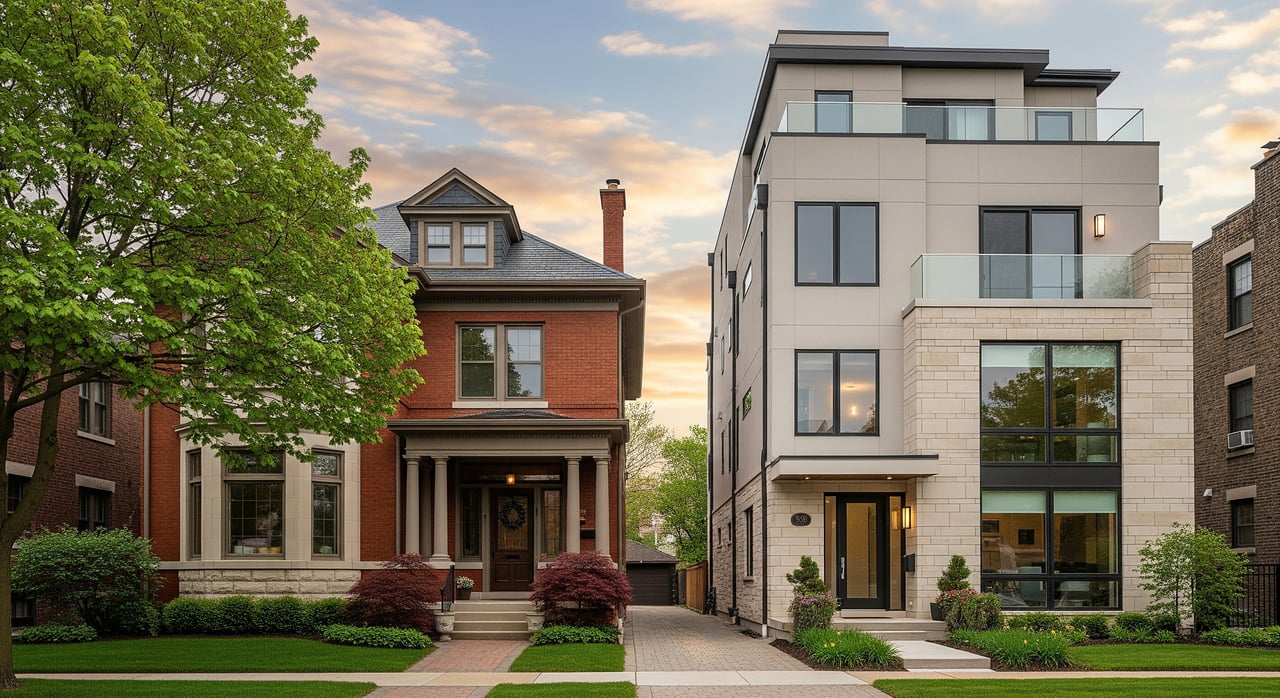
We get this question a lot: is a townhome or a single-family home the smarter move in Downers Grove? If you are weighing commute times, outdoor space, monthly costs, and long-term value, you are not alone. Choosing between attached and detached living here is really about tradeoffs, priorities, and the fine print. In this guide, you will learn the key differences in ownership, costs, financing, lifestyle, and due diligence so you can move forward with confidence. Let’s dive in.
Quick comparison at a glance
| Category | Townhome | Single-family |
|---|---|---|
| Ownership | Often condo form with shared elements governed by an HOA, or fee simple in a planned community | Fee simple ownership of the home and land |
| Upfront price | Often lower than similar-size detached homes because land share is smaller, but verify current comps | Often higher due to land value and lot size |
| Monthly fees | HOA fees cover exterior upkeep, common areas, and sometimes utilities | No HOA fee, you cover all maintenance directly |
| Property taxes | Based on assessed value and local rates; lot value can influence total tax | Often higher if the lot and home have higher assessed value |
| Insurance | HO-6 unit policy plus HOA master policy; coverage depends on master policy scope | HO-3 homeowners policy covers the structure and lot |
| Maintenance | Lower hands-on exterior work, risk of special assessments if reserves are low | Full responsibility for yard, exterior, and systems |
| Flexibility | HOA rules for pets, parking, rentals, and exterior changes | More autonomy for changes, subject to permits |
| Resale | Attractive to commuters and downsizers near transit and amenities | Broad buyer pool seeking space, yard, and privacy |
Ownership and HOA basics
Single-family fee simple
In a single-family home, you own the structure and the land. You control maintenance decisions and improvements, subject to local permits and zoning. You also carry the full cost and responsibility for exterior systems, drainage, and the yard.
Townhome legal forms
Townhomes in Downers Grove come in two common legal structures. Many are in a condominium form, where you own your interior and share exterior elements through a common interest association. Others are fee simple within a planned unit development, which may still include an HOA that handles some exterior services and common areas.
What to verify before you buy
- Determine if the property is a condominium, a townhome, or fee simple detached, and obtain the plat or legal description.
- Request HOA documents: Declaration and CC&Rs, Bylaws, Rules, budget, latest financials, reserve study, meeting minutes, and master insurance declarations.
- Confirm rental policies, pet rules, parking and guest policies, and any pending litigation or special assessments.
Costs: price, fees, taxes, insurance
Purchase price and land value
You will often see townhomes priced below similarly sized detached homes because the land component is smaller. That said, location near Metra, age, finishes, and amenities can swing pricing either way. Ask for a current comparison of median prices, price per square foot, and months of supply by property type in Downers Grove.
HOA fees and what they cover
Most townhome communities include monthly HOA fees. These often cover exterior maintenance, landscaping, snow removal, common area utilities and insurance, and sometimes water or trash. Review the fee schedule, what is included, and the history of past or planned special assessments.
Property taxes in DuPage County
Property taxes are based on assessed value and local tax rates. Because detached homes often sit on larger or more valuable lots, their tax bills can be higher, but every address is different. Request recent tax bills for any property you are considering and review expected prorations at closing.
Insurance: HO-3 vs HO-6
Single-family owners typically carry an HO-3 policy that covers the structure, personal property, liability, and loss of use. Townhome and condo owners usually carry an HO-6 policy that covers interior improvements, personal property, liability, and loss assessment. The HOA master policy might be bare walls, single entity, or all-in. Your agent and insurance provider should help align your HO-6 to fill any gaps.
Financing, appraisal, and resale
Project approvals for attached homes
If you plan to use FHA or VA financing for a townhome in a condominium project, eligibility may depend on project approval. Lenders also review HOA reserves, investor concentration, and financial health for conventional loans in some cases. Get the condo questionnaire and financials early so there are no surprises.
Appraisals and comps
For both property types, appraisers rely on comparable sales. Attached homes require comps that match both property type and location. Pay attention to the quality and recency of comps, and avoid comparing attached properties to detached ones without proper adjustments.
Resale and marketability
Single-family homes often appeal to a broader buyer pool, especially those prioritizing private yards and autonomy. Townhomes can be highly marketable near Metra, downtown shopping, or parks, and they tend to resonate with commuters and downsizers. The stronger choice for resale depends on current local absorption and days on market by property type.
Lifestyle tradeoffs to consider
Privacy and noise
Detached homes generally provide more separation from neighbors. Townhomes share at least one wall, so sound transmission becomes part of your evaluation. During showings, listen for noise and ask about construction type and sound mitigation.
Outdoor space and parking
Single-family homes offer private yards and often larger garages and driveways. Townhomes tend to offer patios, balconies, or shared green spaces, with guest parking rules set by the HOA. Decide how you use outdoor space today and what you will need over the next few years.
Rules, pets, and renovations
HOA rules may limit pet sizes, short-term rentals, or exterior changes. Detached homes give you more flexibility for additions and modifications, subject to village permits and zoning. For attached homes, factor approval timelines into your plans for any major updates.
Maintenance, capital projects, and risk
HOA reserves and special assessments
For townhome buyers, the HOA’s reserve health is critical. Strong reserves support future roof, siding, and paving projects without sudden special assessments. Review the reserve study, recent board minutes, and any notices about capital projects.
Exterior systems and basements
In attached communities, the HOA typically handles exterior capital items. In single-family homes, you fund roof, siding, driveway, and landscape work yourself. In both cases, look closely at drainage, gutters, grading, and any signs of water intrusion, especially in basements.
Flood and stormwater awareness
Downers Grove has areas with older stormwater systems and a mix of lot elevations. Always review flood zone status, inquire about any history of basement backups, and confirm sump pump and backup systems. Understanding local stormwater guidance and recent village projects can help you plan preventive maintenance.
What buyers should check
Townhome buyer checklist
- HOA documents: CC&Rs, Bylaws, Rules, budget, latest financials, reserve study, recent meeting minutes, master insurance declarations, and management agreement.
- Policies: parking and guest rules, snow removal procedures, pet restrictions, rental caps, and any pending litigation.
- Inspection focus: shared wall firestopping, roof and wall junctions, flashing, gutters, water management, sound transmission, and any past water intrusion.
- Financing: confirm condo project approval for your loan type and get the completed questionnaire to your lender early.
Single-family buyer checklist
- Inspection focus: roof, gutters, grading, sump pump and backups, foundation cracks, HVAC, insulation and windows, driveway and garage structure, and tree impact on sewer laterals.
- Permits and zoning: verify permits were closed out for additions or major alterations, and confirm setbacks and easements for any planned projects.
- Taxes and utilities: review the latest tax bill, ask about special taxing districts, and request average utility costs.
What sellers can prepare
If you are selling a townhome
Provide prospective buyers with a clean, complete HOA packet. Highlight covered services, recent capital projects, reserve strength, and any special assessments. Emphasize location benefits that matter to attached-home buyers, such as proximity to Metra, downtown shopping, and parks.
If you are selling a single-family home
Showcase yard size, privacy, parking, and flexible outdoor living areas. Be ready to share the permit history for major renovations and a summary of maintenance on the roof, HVAC, sewer, or drainage. Tidy landscaping and clear staging at the entry can boost curb appeal and perceived value.
When a townhome makes sense
If you prioritize lower hands-on maintenance, predictable exterior care, and being close to the BNSF Metra line or downtown amenities, a townhome may fit well. First-time buyers and downsizers often find value in the lock-and-leave lifestyle. Just make sure the HOA’s financials and rules align with how you live.
When a single-family home makes sense
If you want a private yard, more control over renovations, and space to grow, a single-family home likely fits better. These homes can attract a wide buyer pool and may support long-term additions or layout changes. Plan for higher maintenance and property tax responsibilities compared to many attached options.
Smart next steps in Downers Grove
- Ask for a side-by-side market snapshot: median prices, days on market, inventory, and price per square foot by property type, pulled from the local MLS.
- Review property-specific documents early: tax bills, HOA financials, reserve studies, and any village permit records for past work.
- Align financing with property type: confirm project approvals and documentation needs for attached homes before you write an offer.
Ready to compare real options that match your budget and lifestyle around the Metra, parks, and neighborhood amenities you value? Reach out to Dimpi Mittal for a tailored, data-led plan and a clear path to your next home.
FAQs
Are townhomes cheaper to buy in Downers Grove?
- Often yes, because you are buying a smaller share of land, but always compare current local comps by property type before deciding.
What do HOA fees typically cover in townhome communities?
- Common coverage includes exterior maintenance, landscaping, snow removal, common area upkeep, and sometimes utilities or insurance on shared elements.
Will I pay higher property taxes in a single-family home?
- Possibly, since detached homes may carry higher assessed land and structure values, but exact bills vary by address and taxing districts.
Can I use FHA or VA financing for a townhome here?
- In many cases yes, but eligibility may depend on the condominium project’s approval status and financial health, so confirm with your lender early.
Which has better resale: townhome or single-family?
- It depends on current buyer demand; detached homes often appeal to a broader pool, while townhomes do well near transit and amenities.
What risks should I watch for with HOAs?
- Review reserve studies, meeting minutes, and litigation disclosures to gauge financial health and the likelihood of special assessments.
How do stormwater and flooding factor into my choice?
- Check flood zone status, drainage conditions, and the property’s sump pump and backup systems, and investigate any history of water intrusion.